From Printopia to Purpose: Building a Toddler Mobility Trainer
How a chance encounter with the Tots Mobility Trainer at Printopia 2025 led to a journey of building and donating an open-source pediatric mobility device.
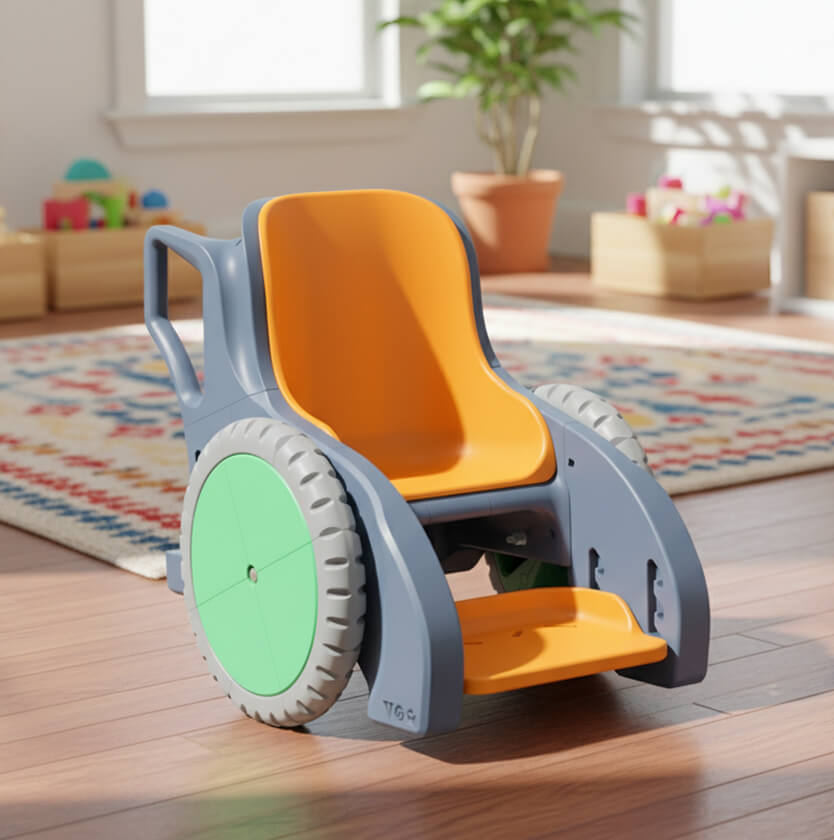
It all started at Printopia 2025. While wandering the floor and taking in everything the 3D printing world had to offer, I stumbled upon a booth run by CookieCAD — and that’s where everything changed. Tucked inside was something I had never seen before: the Tots Mobility Trainer, also known as the TMT, from the Make Good Foundation. This remarkable device is a pediatric mobility wheelchair that is 95% created using 3D printing, making it one of the most accessible and community-driven assistive devices ever designed. From the moment I laid eyes on it, I knew it was something special. I walked away from that booth with an idea planted firmly in the back of my mind — I wanted to build one, and I wanted to donate one.
What Is the Toddler Mobility Trainer?
The Toddler Mobility Trainer is a low-cost, open-source mobility device developed by MakeGood, a New Orleans-based 501(c)3 nonprofit founded by Noam Platt, a certified healthcare architect and specialist in assistive technology. The TMT was designed to increase independence, coordination, and social development for young children with mobility challenges. It is intended for children aged roughly one to eight years old, and its low-to-the-ground design means young users can maintain eye contact with their peers — a small but meaningful detail that speaks to the thoughtfulness behind the project.
The TMT evolved from an earlier wooden design that was manufactured using CNC machinery. The turning point came from a Reddit post by MakeGood founder Noam Platt, who was looking for support in transforming that design into something fully printable on consumer-level 3D printers. What followed was an interdisciplinary collaboration spanning design, architecture, and manufacturing. The result is a modular design that requires no tools or glue for assembly — and if a part breaks or gets damaged, users can simply reprint that specific piece rather than replacing the entire chair. All files are available for free on MakerWorld and through 3DMobility.org, and the project is fully open source.
Since founding MakeGood in 2021, Platt’s team has delivered over 1,600 individualized adaptive devices to families at no cost. As Platt has said, the commercial market will not solve the problem of access to well-designed assistive technology — but people can: designers, engineers, architects, and makers who devote their time and skills to creating a more accessible world.
Making It Happen
That vision resonated deeply with me. In December 2025, I decided to take action. I created a GoFundMe and raised $210 through Facebook — enough to get started on materials. Then, in January 2026, I began the first steps of becoming an authorized maker by printing test objects. The journey is just beginning, but the goal is clear: build a TMT, donate it to a child who needs it, and be a small part of this incredible movement.